Europe is full of good diving. Malta’s case for being one of the best rests on three things you can measure: water that clears past 30 metres, wrecks from both World Wars lying a few minutes from the harbour wall, and a season that never really closes.
Add an island small enough to cross in forty minutes, a flight of under three hours from most of Europe, and you have a destination where four dives on four completely different sites is an ordinary day. Here is how Malta stacks up, and where it genuinely leads.
What makes a great diving destination?
Ask ten divers and you will get ten answers, but the list always narrows to the same five things.
Visibility, because it changes how a dive feels more than any other single factor. Water temperature, and how many months of the year the season actually runs. Variety, meaning how many different kinds of dive sit within reach of one base. Access, which really comes down to how much of your holiday you spend travelling to the water instead of being in it. And the standard of the dive centers, because your instructor is what turns a first dive into a hobby.
Judge any destination in Europe against those five and the shortlist gets short quickly. Malta lands on all five.
Visibility that reaches 30 metres, most of the year
Thirty metres of visibility is not a brochure figure in Malta. It is an ordinary summer day.
The reason is geology. The islands are limestone and have no rivers, so nothing washes sediment into the sea. There is very little runoff to feed plankton blooms, and the water around Malta is naturally low in nutrients. What you get is clarity that holds from spring through late autumn, and very often right through the winter.
Underwater that changes everything. You see the shape of a wreck before you reach it. An instructor can keep a group together on a first open water dive without anyone feeling lost. And underwater photographers get natural light at depths where most European sites already need a torch.
It is also why so many divers describe their first Maltese dive as the moment diving finally made sense.
Wrecks you can dive on your second day
Malta’s wrecks are famous for their history. What surprises visiting divers is how early in their diving career they can reach them.
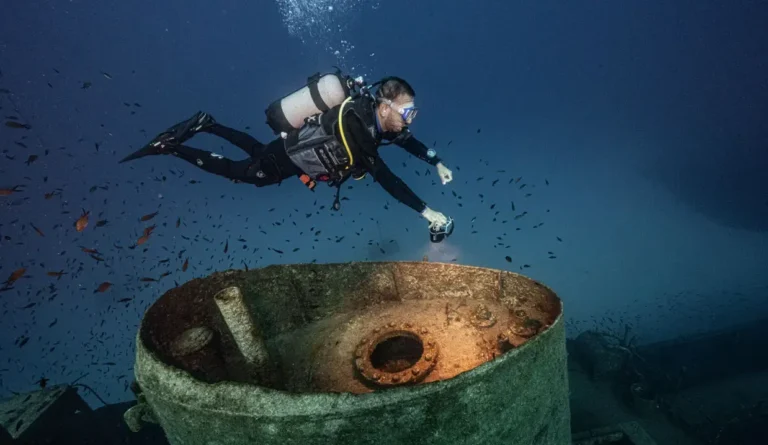
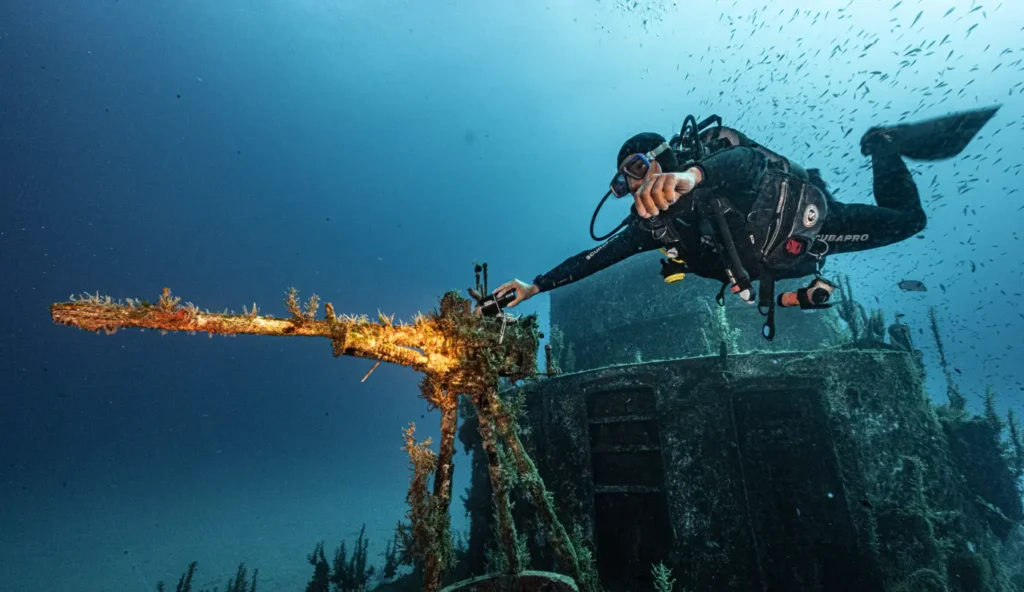
The MV Rozi, a tug sunk off Cirkewwa, lies in the mid thirties with her superstructure rising much shallower, so certified divers see a great deal of her on a single dive. The P29 patrol boat sits nearby on sand, upright and intact, one of the cleanest wreck profiles in the Mediterranean. Deeper down, the Um El Faroud opens up once you hold an Advanced Open Water certification. There is a lot more where those came from, and we have written about the history behind Malta’s most famous wrecks separately.
You do not even need to be certified to see one. Our Try Dive with wrecks takes complete beginners down to a wreck on their first ever dive, with an instructor at arm’s length the whole way.
Reefs, caves and swim-throughs on the same trip
The wrecks are the headline. The limestone is what brings divers back.
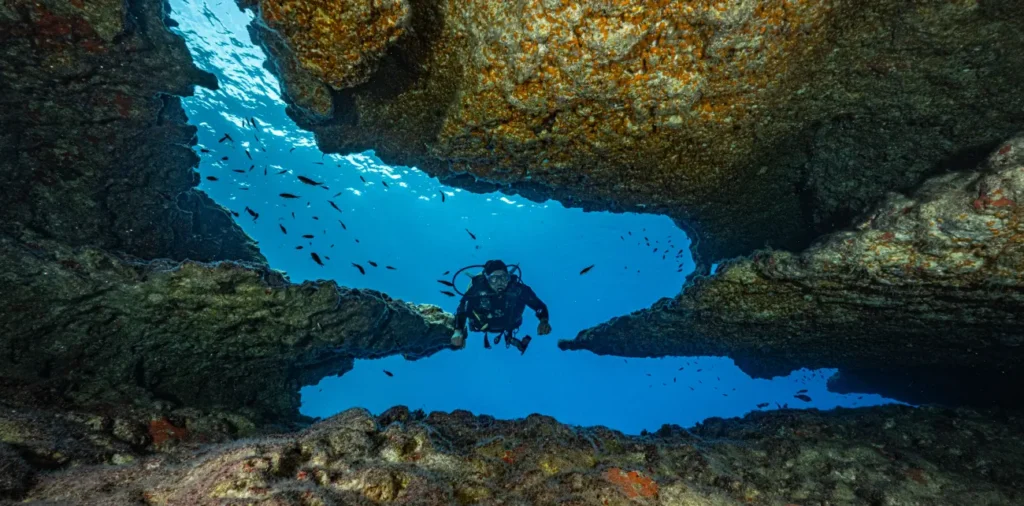
Thousands of years of water working on soft rock have left Malta, Gozo and Comino covered in arches, tunnels, chimneys and swim-throughs. At Santa Maria Caves off Comino you move through a series of connected caverns with shafts of light coming down through the roof. On Gozo, the tunnel at the Inland Sea carries you out of a sheltered lagoon onto a vertical wall that drops away beneath your fins.
All of it sits inside the same short boat ride. That density is Malta’s real advantage: a wreck before lunch and a cavern system after it, without ever changing base. Our guided dives are built around exactly that, and the full list of dive sites gives you the map.
How Malta compares with Europe’s other top dive destinations
Every destination on this list is worth diving. They are simply good at different things.
| Destination | Strongest for | Season | Getting there |
|---|---|---|---|
| Malta | Wrecks, caverns and year-round access | All year | Under 3 h from most of Europe |
| Azores | Big pelagics: blue sharks, mobulas, whales | June to October | Long haul plus inter-island flights |
| Canary Islands | Warm water all year, volcanic terrain, angel sharks | All year | Around 4 h from northern Europe |
| Croatia | Adriatic wrecks and walls | May to October | Easy by air and by road |
| Sardinia | Reefs, caves and clear water | May to October | Short flights, seasonal routes |
| Norway | Cold-water wrecks and kelp forests | Summer for visibility | Dry suit territory |
Where Malta leads is the combination. The Azores win on big animals and Norway on cold-water drama, but very few places in Europe put wrecks, caverns, reefs and a full training center within forty minutes of each other, and keep doing it in January.
Diving 365 days a year
Malta’s diving season does not close. It changes character.
Summer brings the warmest water and the busiest sites. Autumn is the window many instructors quietly rate highest: the sea is still warm, visibility peaks and the boats thin out. Winter asks for a thicker wetsuit or a dry suit and pays you back with sites you may have entirely to yourself. With more than three hundred days of sunshine a year, the surface interval is rarely a problem either.
We run dives every day of the year, so the question is never whether you can dive. It is only what you feel like diving. If you are choosing dates, our seasonal guide goes month by month.
Three hours from most of Europe
Malta is one of the easiest diving trips in Europe to organise.
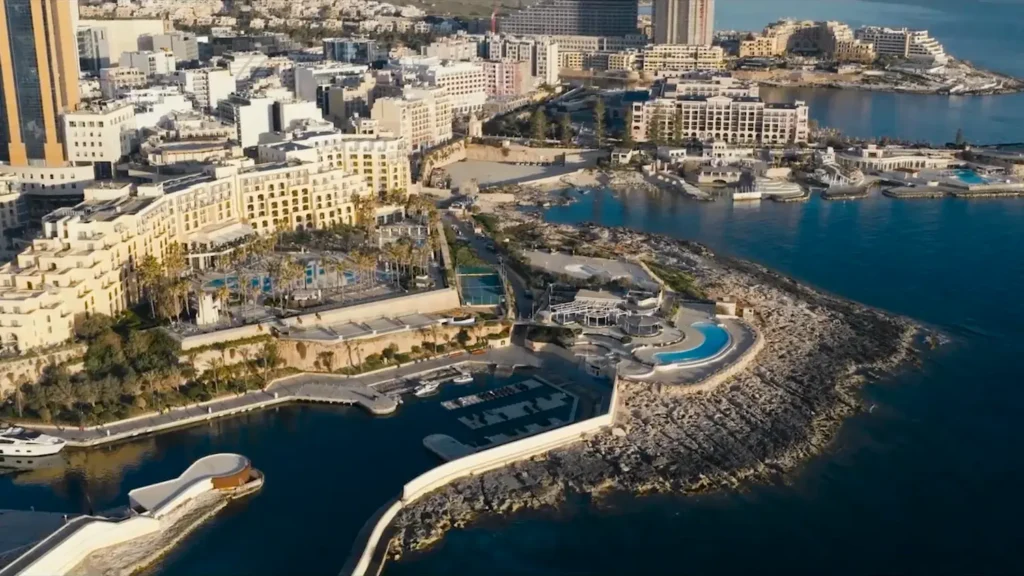
Direct flights land from most major European cities in three hours or less, and the archipelago is compact enough that no dive site is more than about forty minutes from St Julian’s. No domestic transfer, no dawn drive, no half day lost to logistics.
It also works for the people travelling with you who do not dive. Valletta, seven thousand years of history and a coastline of swimming spots all sit inside those same short distances, which makes Malta an unusually easy sell to a partner who would rather stay dry.
Ready to dive Malta?
The case on paper is strong. The reason divers come back is harder to write down: it is the first time you drop onto a wreck in water clear enough to take her in all at once.
If you have never breathed underwater, start with a Try Dive. If you want to fly home certified, the Open Water course takes three to four days. And if you already have a card in your pocket, come out on our guided dives and we will take you to the sites we would pick for ourselves.