Malta is one of Europe’s top destinations for wreck diving, offering an incredible mix of wartime history and purpose-sunk artificial reefs. Thanks to the island’s crystal-clear waters and excellent visibility, divers can explore vessels that have witnessed historic events or have been given a second life beneath the surface.
Every wreck tells a different story. Some were lost during World War I and II, while others were intentionally scuttled to create artificial reefs that now support thriving marine ecosystems. Whether you’re interested in maritime history, underwater photography, or simply discovering unique dive sites, Malta has a wreck for every level of diver.
Here’s the history behind some of Malta’s most famous shipwrecks.
Why Malta Is Famous for Wreck Diving
Malta’s strategic position in the Mediterranean has shaped its history for centuries. During both World Wars, the islands became a key naval base, resulting in several military vessels being lost in the surrounding waters. In more recent decades, retired ships have also been deliberately sunk to expand marine habitats and create exciting dive sites.
Combined with visibility that often exceeds 30 metres and easy access from shore, these wrecks have made Malta one of the world’s most respected wreck diving destinations.
Um El Faroud: Malta’s Most Iconic Wreck
The Um El Faroud is widely regarded as Malta’s signature wreck dive and is often considered one of the best wreck dives in Europe.
Built in England in 1969, the vessel served as a Libyan oil tanker transporting fuel across the Mediterranean. In 1995, while undergoing maintenance at Malta Drydocks, a tragic gas explosion claimed the lives of nine workers, bringing the ship’s career to an end.
Rather than being scrapped, the tanker was intentionally sunk off Wied iż-Żurrieq in 1998. A powerful storm later split the wreck into two sections, creating the dramatic swim-throughs that attract advanced divers today. Resting at around 36 metres, the wreck is now covered with marine life and remains one of Malta’s most unforgettable dives.
MV Rozi: A Classic Artificial Reef
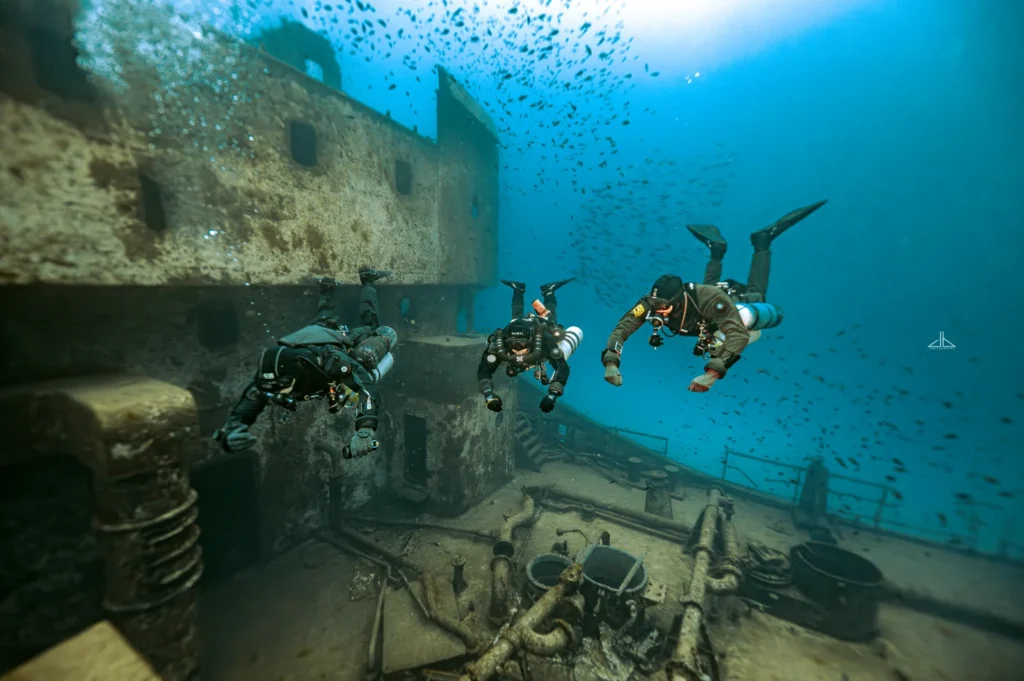
The MV Rozi proves that retired ships can become some of the Mediterranean’s best dive sites.
Built in 1958, the harbour tug spent decades working in Valletta’s Grand Harbour before being retired in the early 1990s. Instead of being dismantled, it became part of Malta’s artificial reef programme and was intentionally sunk at Cirkewwa.
Today, the wreck remains remarkably intact, making it easy to recognise the wheelhouse, propeller, and overall structure. Barracuda, groupers, moray eels, and octopus are frequently spotted around the wreck, making every dive slightly different.
Tug 2: Malta’s Newest Wreck Dive
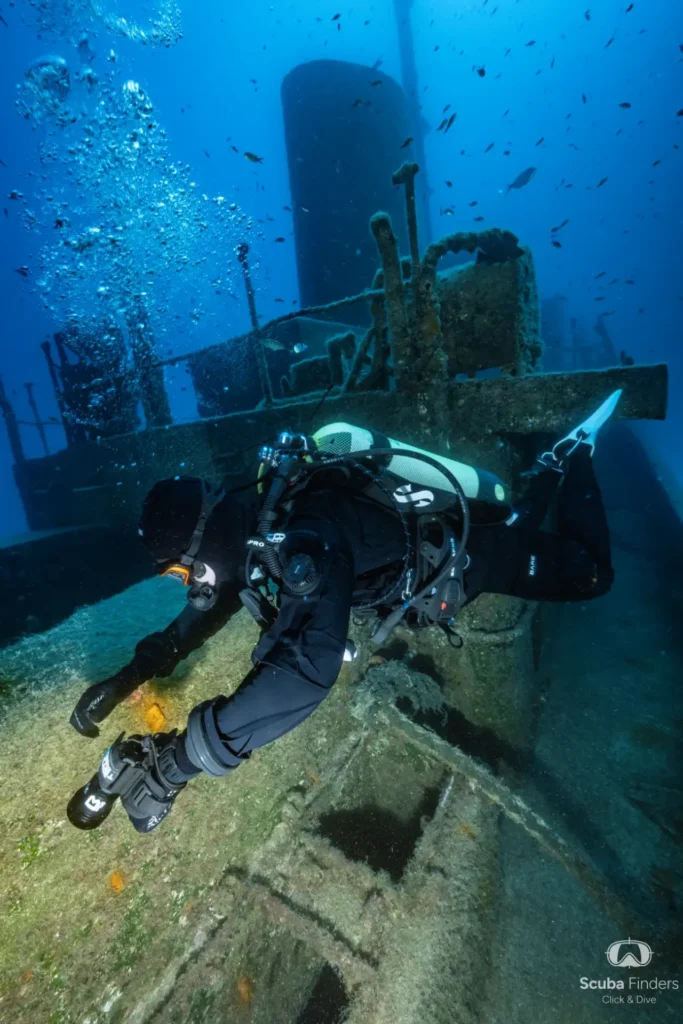
Compared to Malta’s older wrecks, Tug 2 is a relatively recent addition.
The vessel worked inside Malta’s Grand Harbour before being deliberately scuttled near Exiles in 2013. A storm a few years later shifted the wreck closer to the reef, making it even more interesting to explore.
Today, Tug 2 is known for its colourful marine growth and excellent macro life. Nudibranchs, scorpionfish, and numerous small reef species have transformed the once-working tug into a thriving underwater habitat suitable for divers progressing into wreck diving.
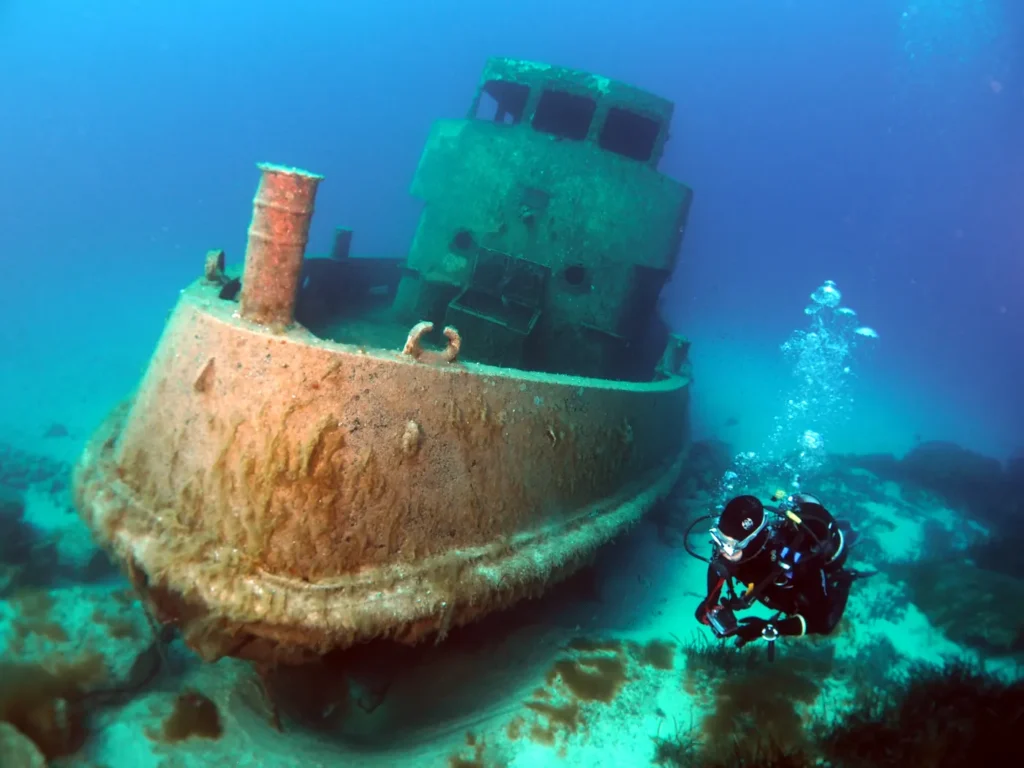
MV Karwela: Gozo’s Most Photographed Wreck
Few underwater locations are as instantly recognisable as the staircase inside MV Karwela.
Originally built in Germany as a passenger ferry, the ship later operated tourist cruises around Malta before becoming part of Gozo’s artificial reef project in 2006.
Lying at around 40 metres, the wreck attracts advanced divers and underwater photographers from around the world. Its famous staircase has become one of the most photographed underwater scenes in Europe and is considered a highlight of diving in Gozo.
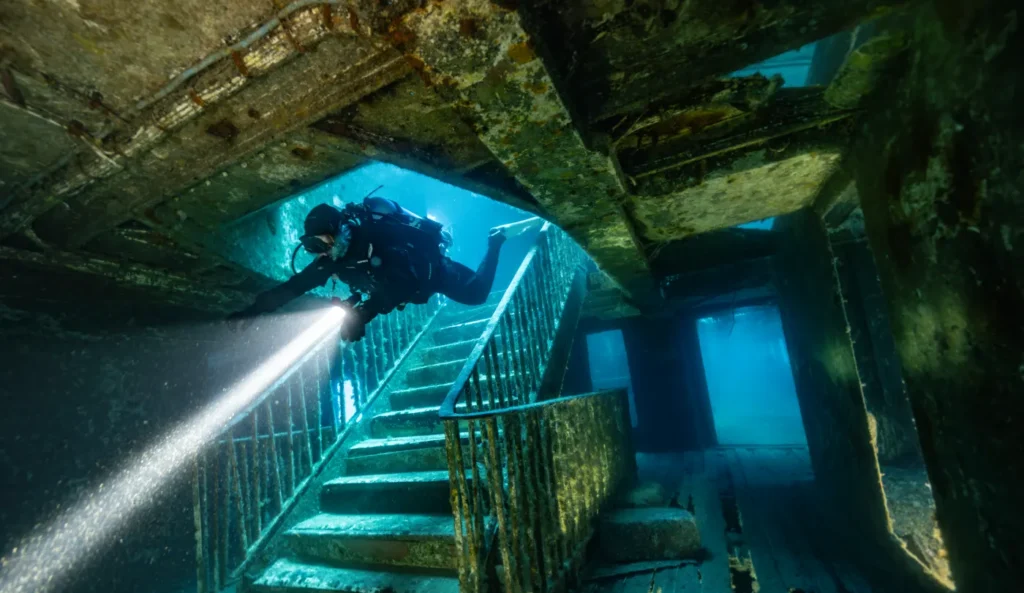
MV Cominoland: From Naval Service to Artificial Reef
Located close to Karwela, MV Cominoland has enjoyed one of the most varied careers of any Maltese wreck.
Originally built in England in 1942 as a Royal Navy minelayer, the vessel later served as a passenger ferry connecting Valletta and Comino before operating sightseeing cruises around the islands.
When it was intentionally sunk in 2006, divers gained another outstanding wreck to explore. Before the sinking, its paint was removed as part of a marine growth experiment, allowing scientists to observe how quickly marine organisms colonised the structure.
P29: A Former Patrol Boat Beneath the Surface
The P29 offers divers the chance to explore a genuine military vessel that has found a new purpose underwater.
Originally built in Germany during the Cold War, the ship later served with the Armed Forces of Malta before being retired. In 2007, it was intentionally sunk at Cirkewwa to expand the area’s artificial reef system.
Today, P29 rests upright on the seabed and has become one of Malta’s most popular advanced wreck dives. Its open structure and excellent visibility make it a favourite among underwater photographers.
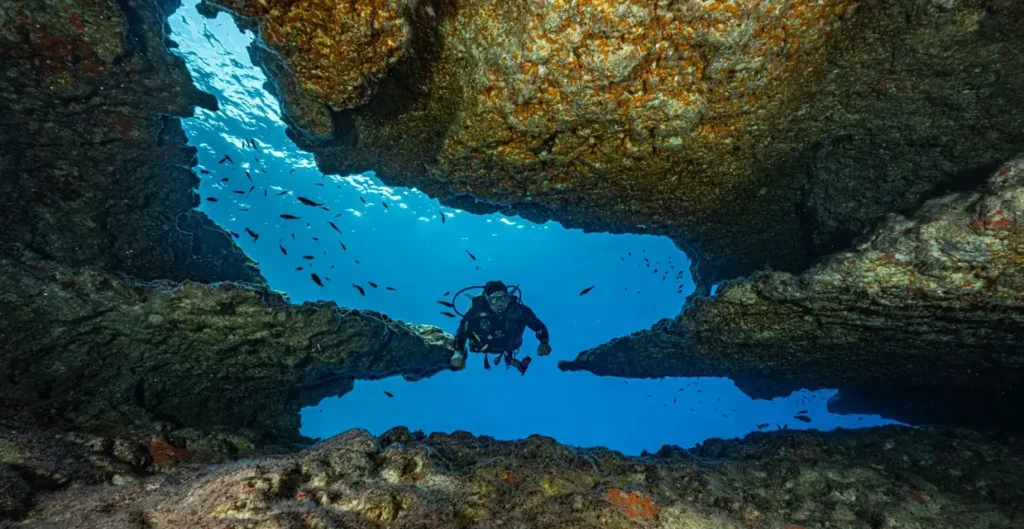
X127: Malta’s Forgotten Wartime Wreck
The X127 may not be Malta’s largest wreck, but it has one of the island’s most fascinating stories.
Built in 1915, the vessel served the Royal Navy during World War I before later transporting fuel and fresh water around Malta. During the intense bombing campaigns of 1942, the ship was sunk and remained unidentified for decades.
Divers knew the wreck only as “Carolita” until researchers confirmed its true identity in 2000. Thanks to its shallow depth, X127 is an excellent introduction to historical wreck diving and a reminder of Malta’s important role during both World Wars.
Explore Malta’s Historic Shipwrecks
Malta’s wrecks are far more than dive sites, they’re underwater museums that tell the story of war, commerce, engineering, and marine conservation. Whether you’re discovering a World War II destroyer, swimming through the massive Um El Faroud, or photographing Karwela’s famous staircase, every dive offers a different perspective on the island’s rich maritime history.
Ready to explore Malta’s legendary wrecks? Discover our Wreck Diving in Malta experiences or join one of our Guided Fun Dives and dive into some of the Mediterranean’s most remarkable underwater landmarks.