Malta tiene más pecios buceables en poco espacio que casi cualquier otro sitio de Europa, y vienen de dos orígenes muy distintos: barcos perdidos en la guerra y barcos hundidos a propósito para crear arrecifes.
Esa mezcla es lo que hace que el buceo aquí sea distinto. En una semana puedes poner las manos sobre un destructor de la Marina Real a catorce metros y recorrer a lo largo un petrolero a treinta y seis. Abajo tienes la historia de cada uno, junto con la profundidad y la certificación que necesitas para llegar.
Por qué Malta es famosa por el buceo en pecios
Dos accidentes de la historia, uno geológico y otro militar.
Malta está en mitad del Mediterráneo, lo que la convirtió en una de las bases navales más disputadas de Europa durante las dos guerras mundiales. Aquí se perdieron barcos en cantidad. Después, a partir de los años noventa, las islas pusieron en marcha un programa deliberado de arrecifes artificiales, hundiendo remolcadores, ferris y patrulleras retirados en lugares y profundidades elegidos.
El resultado es un catálogo de pecios que un puerto en activo nunca produciría por sí solo: sentados en posición vertical, libres de redes, en agua que suele abrirse más allá de los 30 metros y casi todos accesibles desde costa.
Los pecios de Malta de un vistazo
| Pecio | Profundidad | Certificación | Dónde |
|---|---|---|---|
| HMS Maori | 14 a 16 m | Open Water | Marsamxett, La Valeta |
| Tug 2 | ~20 m | Open Water | Exiles, Sliema |
| X127 | Poco profundo, sobre pendiente | Open Water | Isla Manoel |
| MV Rozi | 18 a 36 m | Open Water a Advanced | Cirkewwa |
| P29 | ~33 m | Advanced | Cirkewwa |
| Um El Faroud | Cubierta ~25 m, máx. 36 m | Advanced | Wied iż-Żurrieq |
| MV Karwela | ~40 m | Deep | Xatt l-Aħmar, Gozo |
| MV Cominoland | ~40 m | Deep | Xatt l-Aħmar, Gozo |
HMS Maori: un destructor de la Marina Real a catorce metros
El HMS Maori es el pecio que mete a Malta en la lista de muchos buceadores, y se lo ganó por encima del agua más que por debajo.
Destructor de clase Tribal de la Marina Real, participó en la acción final contra el Bismarck en mayo de 1941. En febrero de 1942, durante uno de los bombardeos sobre La Valeta, fue alcanzado y se hundió en el puerto. Lo que quedó de él se reflotó después de la guerra y se hundió frente a St Elmo, donde aún reposa la sección de proa.
Está a unos catorce metros sobre arena, y eso es lo que lo hace notable. No un remolcador hundido a propósito ni un proyecto de arrecife, sino un buque de guerra hundido en combate, lo bastante somero para un buceador que se certificó la semana pasada.
Profundidad 14 a 16 m · Open Water · Marsamxett, La Valeta
Um El Faroud: el pecio insignia de Malta
El Um El Faroud está considerado el pecio insignia de Malta y a menudo se cuenta entre las mejores inmersiones en pecios de Europa.
Construido en Inglaterra en 1969, sirvió como petrolero libio transportando combustible por el Mediterráneo. En 1995, durante unas tareas de mantenimiento en los astilleros de Malta, una trágica explosión de gas se llevó la vida de nueve trabajadores y puso fin a la carrera del barco.
En lugar de desguazarlo, se hundió intencionadamente frente a Wied iż-Żurrieq en 1998. Un temporal partió después el pecio en dos secciones, creando los espectaculares pasos que hoy atraen a los buceadores avanzados. A unos 36 metros, el pecio está hoy cubierto de vida marina y sigue siendo una de las inmersiones más inolvidables de Malta.
Cubierta a ~25 m, máximo 36 m · Advanced Open Water · entrada desde costa en Wied iż-Żurrieq
MV Rozi: el remolcador que se convirtió en arrecife
El MV Rozi demuestra que los barcos retirados pueden convertirse en algunos de los mejores puntos de buceo del Mediterráneo.
Construido en 1958, este remolcador de puerto pasó décadas trabajando en el Gran Puerto de La Valeta antes de ser retirado a principios de los noventa. En lugar de desmantelarlo, pasó a formar parte del programa de arrecifes artificiales de Malta y se hundió intencionadamente en Cirkewwa.
Hoy el pecio sigue notablemente íntegro, lo que hace fácil reconocer el puente, la hélice y la estructura general. Alrededor se ven con frecuencia barracudas, meros, morenas y pulpos, lo que hace que cada inmersión sea ligeramente distinta.
Profundidad 18 a 36 m · Open Water para la superestructura, Advanced para el fondo · entrada desde costa en Cirkewwa
P29: una patrullera de la Guerra Fría en el fondo
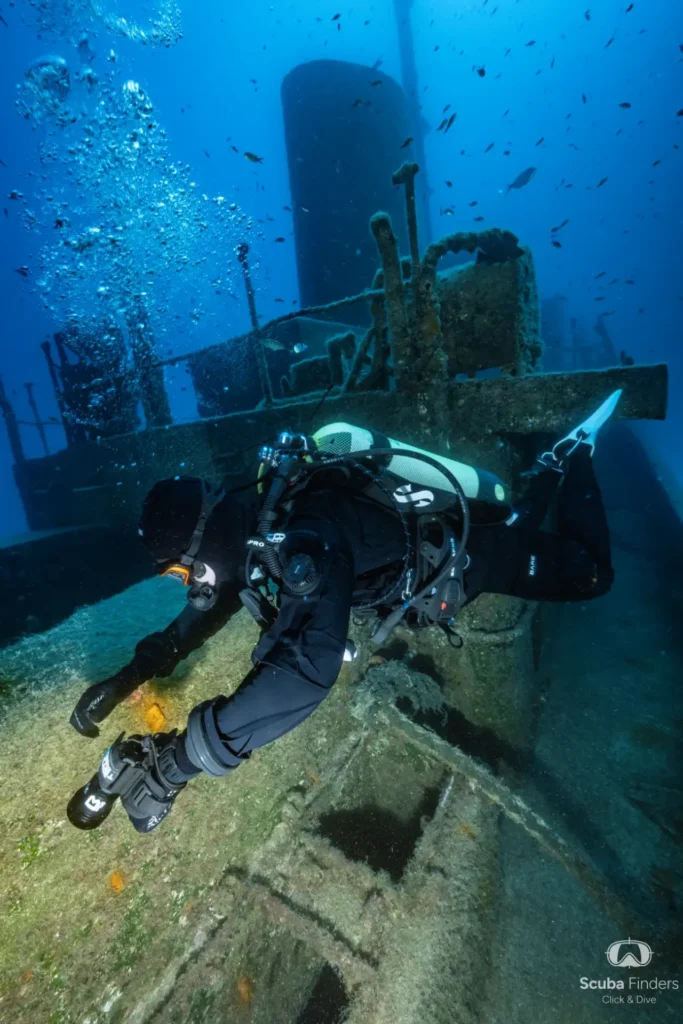
El P29 ofrece la oportunidad de explorar un buque militar auténtico que ha encontrado un nuevo propósito bajo el agua.
Construido en Alemania durante la Guerra Fría, sirvió después en las Fuerzas Armadas de Malta antes de ser retirado. En 2007 se hundió intencionadamente en Cirkewwa para ampliar el sistema de arrecifes artificiales de la zona.
Hoy el P29 reposa en posición vertical sobre el fondo y se ha convertido en una de las inmersiones avanzadas en pecios más populares de Malta. Su estructura abierta y la excelente visibilidad lo hacen favorito entre los fotógrafos submarinos.
Profundidad ~33 m · Advanced Open Water · entrada desde costa en Cirkewwa
Tug 2: el pecio más reciente de Malta
Comparado con los pecios más antiguos de Malta, el Tug 2 es una incorporación relativamente reciente.
El barco trabajó dentro del Gran Puerto de Malta antes de ser hundido deliberadamente cerca de Exiles en 2013. Un temporal, unos años después, desplazó el pecio más cerca del arrecife, lo que lo hizo aún más interesante de explorar.
Hoy el Tug 2 es conocido por su colorido crecimiento marino y su excelente vida macro. Nudibranquios, peces escorpión y numerosas especies pequeñas de arrecife han convertido el antiguo remolcador en un hábitat submarino lleno de vida, adecuado para buceadores que empiezan a iniciarse en los pecios.
Profundidad ~20 m · Open Water · entrada desde costa en Exiles
X127: el pecio de guerra olvidado de Malta
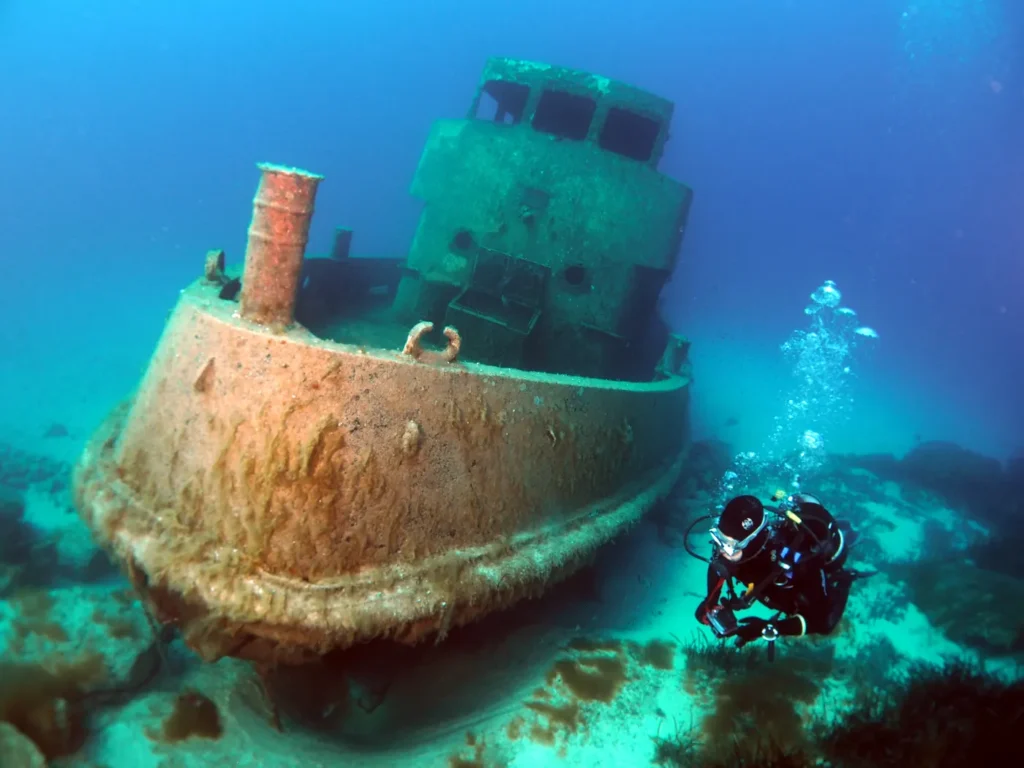
El X127 puede que no sea el pecio más grande de Malta, pero tiene una de las historias más fascinantes de la isla.
Construido en 1915, sirvió a la Marina Real durante la Primera Guerra Mundial y después transportó combustible y agua dulce por Malta. Durante los intensos bombardeos de 1942 fue hundido y permaneció sin identificar durante décadas.
Los buceadores lo conocían solo como «Carolita» hasta que fue inspeccionado por primera vez en 2003 y confirmado como HMS X127 en 2006. Gracias a su poca profundidad, el X127 es una excelente introducción al buceo en pecios históricos y un recordatorio del papel de Malta en las dos guerras mundiales.
Poco profundo, apoyado sobre una pendiente · Open Water · entrada desde costa en la isla Manoel
MV Karwela: el pecio más fotografiado de Gozo
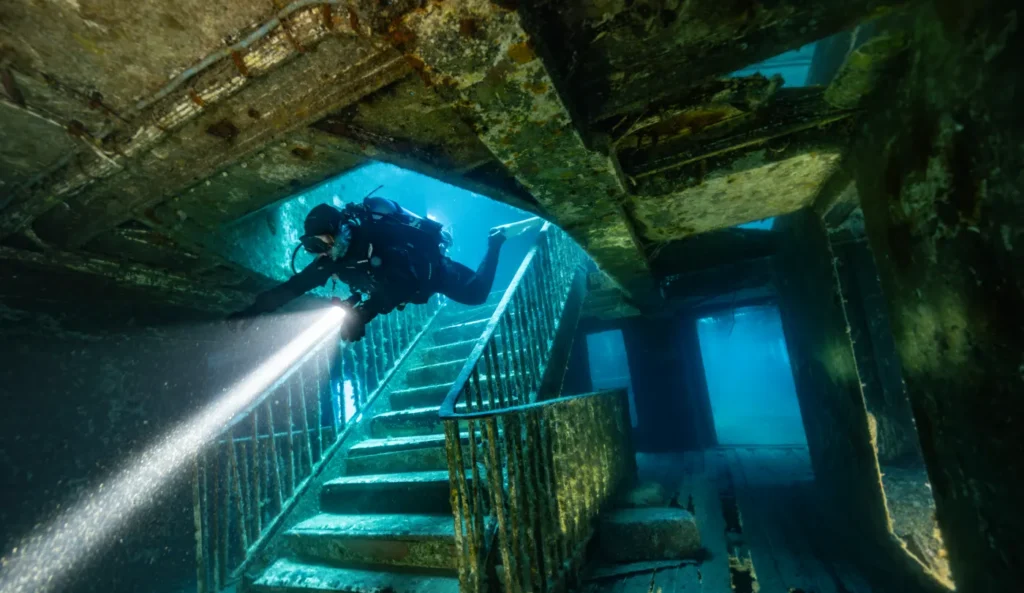
Pocos lugares submarinos son tan reconocibles al instante como la escalera del interior del MV Karwela.
Construido originalmente en Alemania como ferry de pasajeros, el barco operó después cruceros turísticos por Malta antes de integrarse en el proyecto de arrecifes artificiales de Gozo en 2006.
A unos 40 metros, el pecio atrae a buceadores avanzados y fotógrafos submarinos de todo el mundo. Su famosa escalera se ha convertido en una de las escenas submarinas más fotografiadas de Europa y está considerada uno de los grandes atractivos del buceo en Gozo.
Profundidad ~40 m · Deep Diver · entrada desde costa en Xatt l-Aħmar, Gozo
MV Cominoland: de minador a arrecife artificial
Situado cerca del Karwela, el MV Cominoland ha tenido una de las carreras más variadas de todos los pecios malteses.
Construido en Inglaterra en 1942 como minador de la Marina Real, sirvió después como ferry de pasajeros entre La Valeta y Comino antes de dedicarse a cruceros turísticos por las islas.
Cuando se hundió intencionadamente en 2006, los buceadores ganaron otro pecio extraordinario que explorar. Antes del hundimiento se le retiró la pintura como parte de un experimento de crecimiento marino, lo que permitió a los científicos observar la rapidez con la que los organismos marinos colonizaban la estructura.
Profundidad ~40 m · Deep Diver · entrada desde costa en Xatt l-Aħmar, Gozo
¿Qué pecios puedes bucear con tu nivel?
Tu certificación decide esto mucho más que tu forma física.
Con una certificación Open Water puedes bucear el HMS Maori, el Tug 2 y el X127 con comodidad, y ver buena parte del Rozi. Eso son dos pecios de guerra y un remolcador en tu primer viaje a la isla.
Con Advanced Open Water añades el P29 y el Um El Faroud, que es el punto en el que la mayoría de los buceadores dicen que el buceo en pecios les cobra sentido de verdad.
Para el Karwela y el Cominoland, en Gozo, y para entrar dentro de un pecio en lugar de sobrevolarlo, quieres las especialidades Deep y Wreck Diver. Las dos se pueden hacer estando aquí, y las dos merecen la pena en un agua tan clara.
Bucéalos tú mismo
Leer sobre un pecio y quedarse suspendido encima de uno son experiencias distintas. Las fotografías nunca transmiten la escala.
Si ya buceas, nuestras salidas guiadas van a estos puntos todo el año y nuestros instructores han bajado a ellos cientos de veces. Si quieres entrar dentro como es debido, la especialidad Wreck Diver enseña los cabos, las luces y la disciplina que hacen segura la penetración. Y si no has buceado nunca, el bautismo con pecio pone un barco hundido en tu primera inmersión.